Designing trust for high-value bookings
Reducing friction in a two-sided marketplace by designing 'Trust Signals' that bridge the gap between high-intent and booking commitment
When users book high-value assets (like expensive campervans), 'Fear of Loss' often overrides desire. My role was to de-risk the booking process psychologically, using identity verification and social proof.
December 2023 - February 2024
-
Context & Project type
The Context: Goboony is a P2P marketplace where owners entrust high-value assets (campervans) to strangers. Unlike booking a hotel (B2C), this is C2C. The risk profile is asymmetrical:
The Owner (Supplier): "Will they wreck my asset?"
The Renter (Demander): "Is this campervan real? Is the owner a scammer?"
The Objective: To increase the Conversion Rate from Page View to Request Initiated. We identified a critical drop-off point: Users showed high intent (browsing) but low commitment (booking) due to a "Trust Gap."
-
Objective & Hypothesis
Our objective was to increase the conversion percentage from page viewed to request initiated, as well increase number of requests sent. After working with the data team, we gained key insights to validate the problem and hypothesis. Our problem space was focused on the element of trust, that is leverage with human touch points.
Our hypothesis is that by adding more relevant trust signals to the details page, we’ll increase the trust travellers have in a campervan owner and therefore the conversion percentage to request initiated, request sent and inquiry sent will increase.
-
My role and responsibilities
As lead UX designer, my responsibilities starts at defining the right problem. Working closely with the data team to gather insights to validate our problem space, and formulate a hypothesis.
To ensure the solution we designed and built was feasible, I facilitated ideation sessions that involved the developers, growth hacker, and crm team member. From there, I helped sketch out the solution and designed the UI elements for development. Lastly, I worked closely with the growth hacker who setup the tracking plan, so we can accurately monitor the AB tests to measure the correct metrics to our hypothesis.
Project Summary
How might we reduce fear in users by increasing the element of trust, so that they will send more booking requests for a campervan listing that has no reviews?
The objectives in this project was to identify key points in the booking funnel that lack elements of trust, have high moments of fear, and high level of decision making is needed.
The Challenge
Customer challenge
When considering renting someones personal campervan for my expensive holiday, I am challenged to rely on, and trust a stranger to ensure my holiday will go as expected
User challenge:
For any user trusting a stranger is a daunting task. Travellers viewing a campervan listing need to trust not only the owner of the vehicle, but the vehicle itself before they even consider sending a booking request. As a user, I look for reasons to not trust someone, rather than the opposite way around.
These trust signals we as humans look for are usually multiple things.
Technical challenge:
Since trust is difficult to measure, we need to find small solutions that can be easy to implement, with little or no development, so that we can work iteratively and find the best additions.
We had 4 weeks to design and develop at least 3 different solutions. Working with only one front end developer, our solutions can’t require complex data queries or backend support.
High Intent, Low Conversion: Behavioural analytics revealed a "Confidence Cliff." 54% of users initiated the flow but abandoned it at the moment of commitment.
The 'Zero-Review' Problem: Listings with reviews converted well, but only 2% had reviews. How do you build trust without booking history?
The Core Hypothesis: If we can substitute 'Booking History' (Reviews) with 'Identity Transparency' (Verification), we can lower the perceived risk for new users.
Methodologies used
Growth-Driven Design: I worked in a "Trio" structure (Design + Growth Lead + Dev).
Rapid Experimentation: We didn't just redesign; we A/B tested specific "Trust Modules."
Heatmap Analysis: We used Hotjar to validate that users were scanning for "Risk Signals" rather than just looking at pretty pictures.
Challenge
Framing our problem
We had some data that proved to us 3 main insights.
1. Campervans with reviews get more bookings
2. Users who message an owner before booking, are more likely to convert and book.
3. From the heat maps, we know that users don’t scroll much. They view mostly the top part of the listing page, and then make a decision.
Our main assumption here is that users are looking for some human elements that help to remove fear, and instil trust. We also know that humans have a negativity bias.
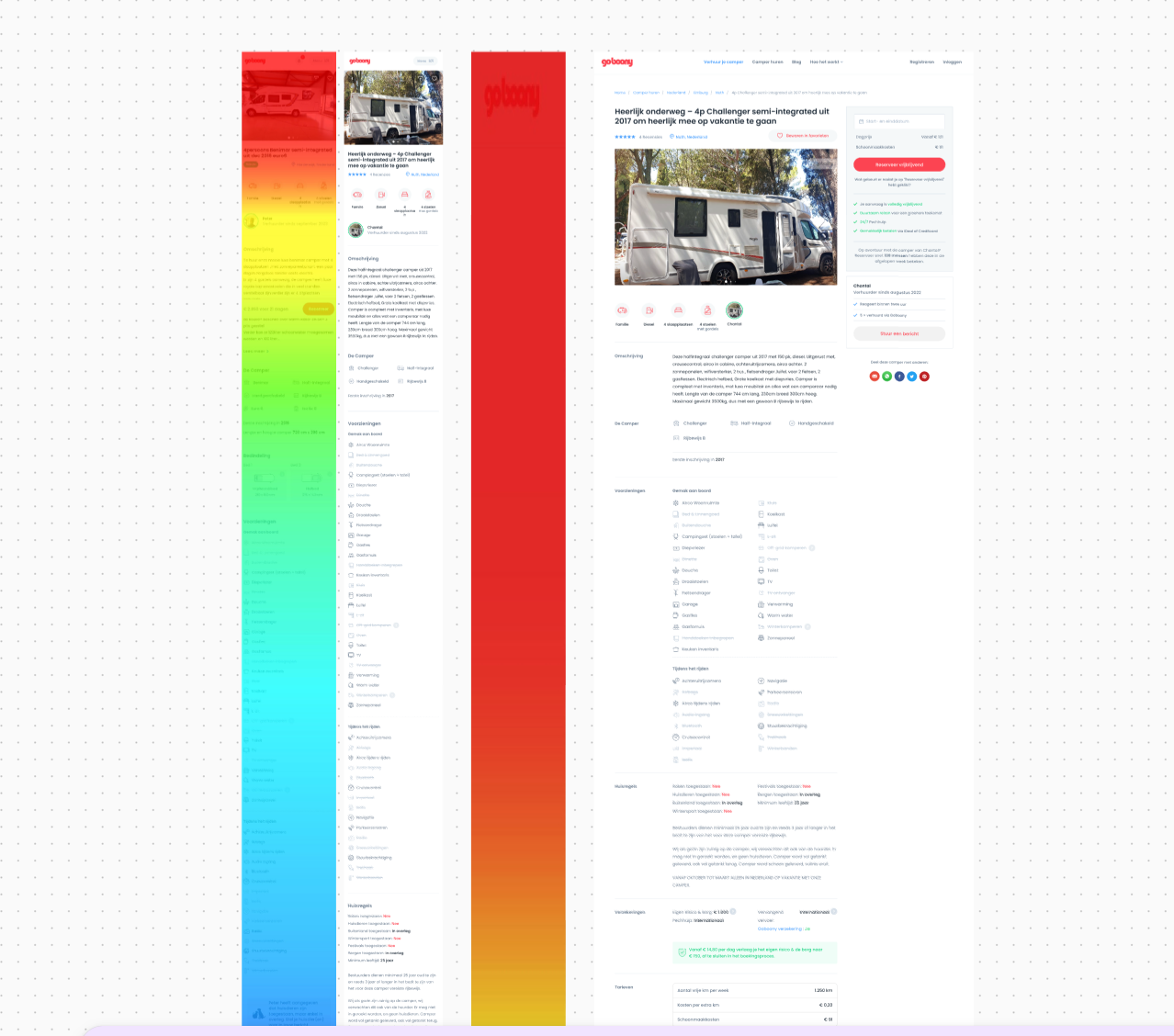
Scroll depth map
Ideating on solutions
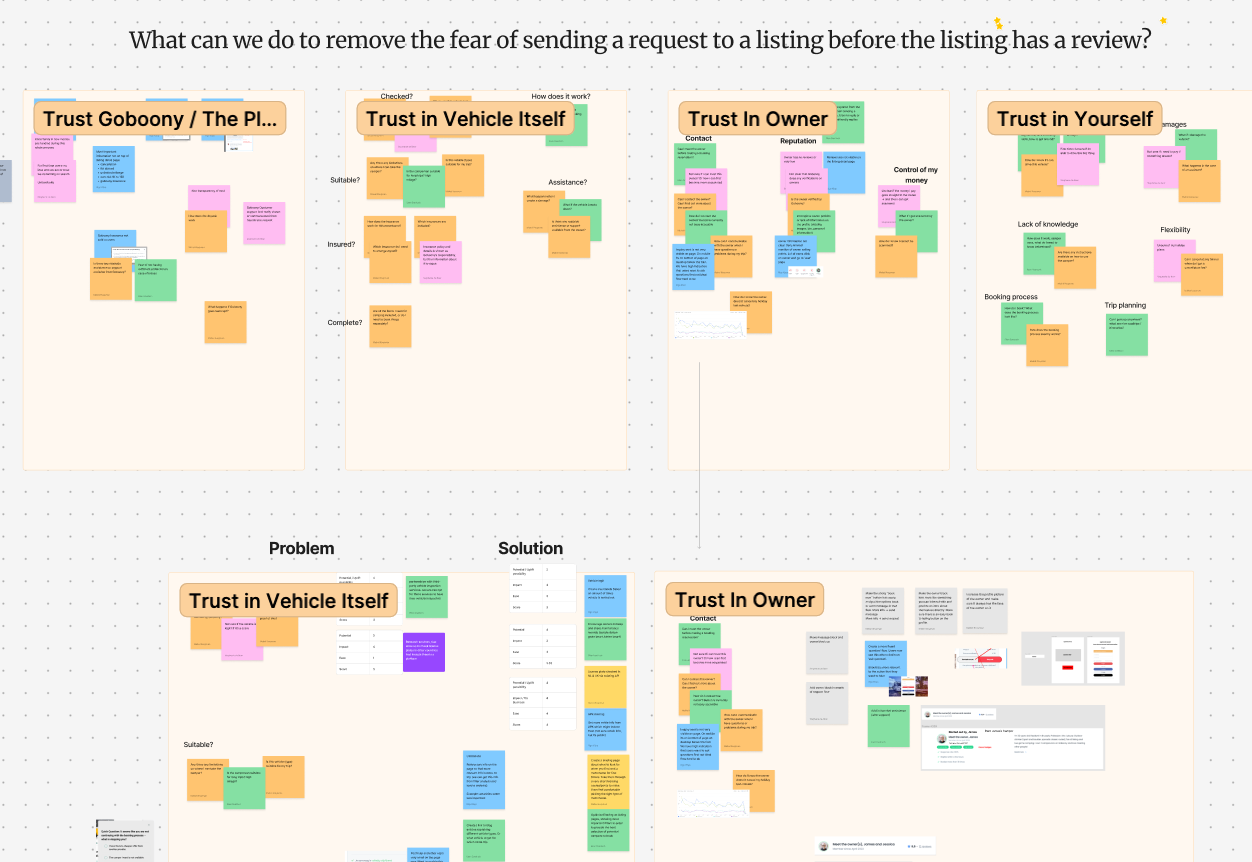
I facilitated ideation sessions with developers, growth hackers, supply team and our product owner to make sure we have data, business insights, and product specialists
We found 4 trust themes:
1. Trust in our platform or brand
2. Trust in the Vehicle
3. Trust in the Owner of the Vehicle
4. Trust in self (aka ability to drive and use a campervan)
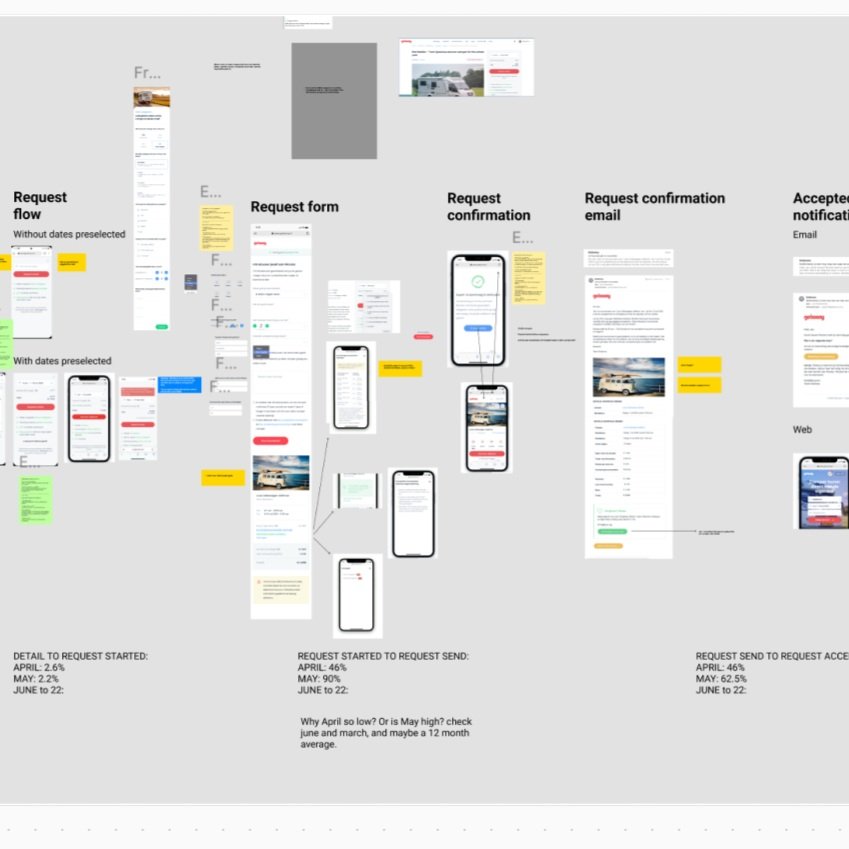
Visual funnel and conversion analysis
Selected Solutions
Identity Transparency and human connection
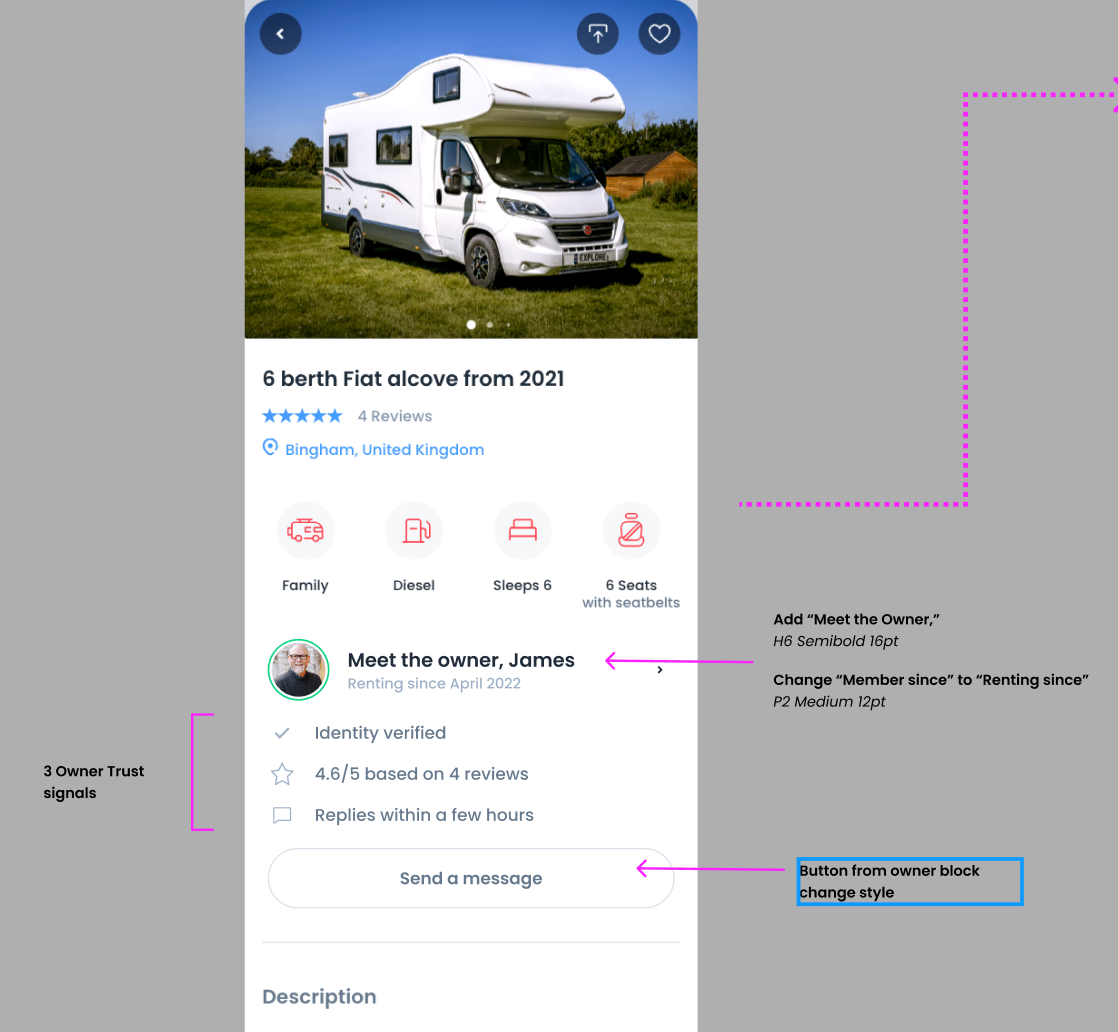
Elevating Identity Signals: In the absence of product reviews, Identity becomes the proxy for trust. We redesigned the rigorous detail page to prioritise the Counterparty Profile. By highlighting response rates and "Verified" badges above the fold, we humanised the counterparty, effectively performing a "Soft KYC" (Know Your Customer) check for the user.
.
Risk insurance
Simplifying Risk Mitigation (Insurance): Legal/Insurance jargon causes cognitive friction. We rewrote complex policy terms into plain English "Benefit Statements." This wasn't just copywriting; it was UX Writing for Compliance, ensuring users understood their safety net without being overwhelmed by fine print.
Verification as a Feature
Visualising "Proof of Asset": We utilised backend vehicle databases to verify the campervan’s existence and insurance status. We surfaced these checks as "Verified Asset" badges on the UI.
Users don't need to see the raw database they just need the UI to confirm the asset is real/verified.
Manage expectations with clear process steps
Our booking journey is not the most straight forward due to it being a marketplace, and our strict and safe process to book. For first timers, it can be confusing to know what happens once I initiate to book. Creating an easy visible and visual representation of our booking flow can help users feel confident to start the process
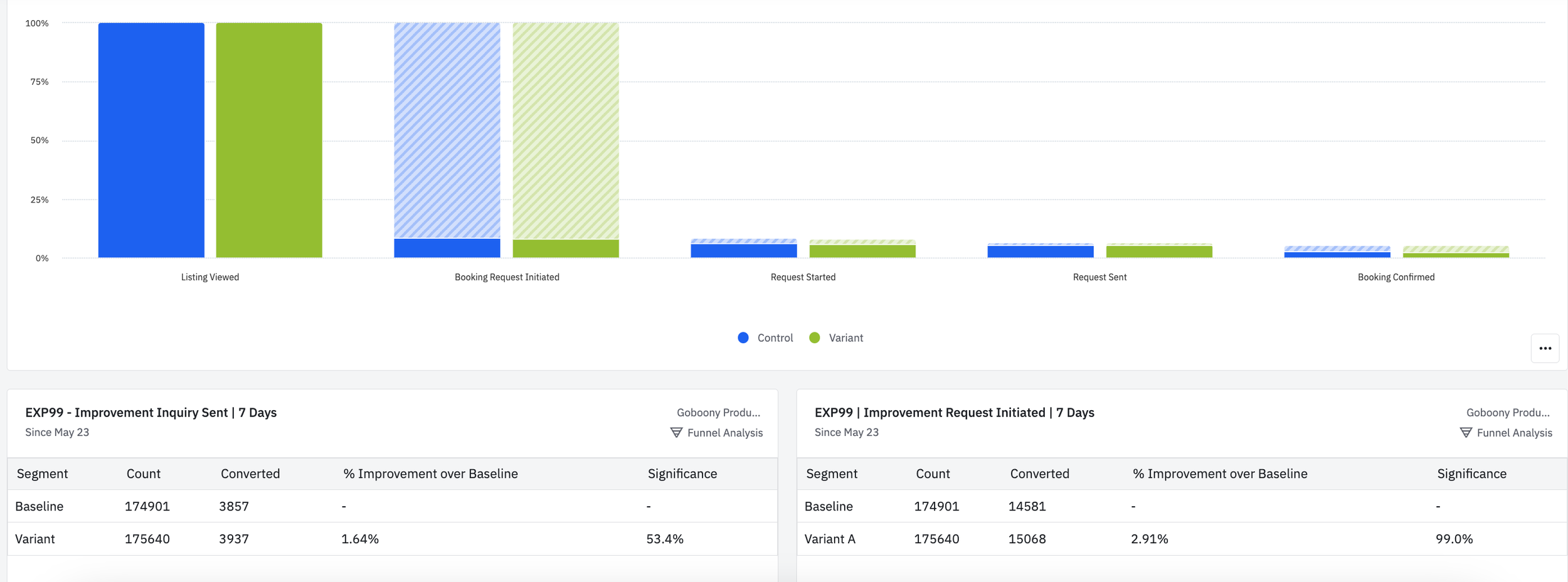
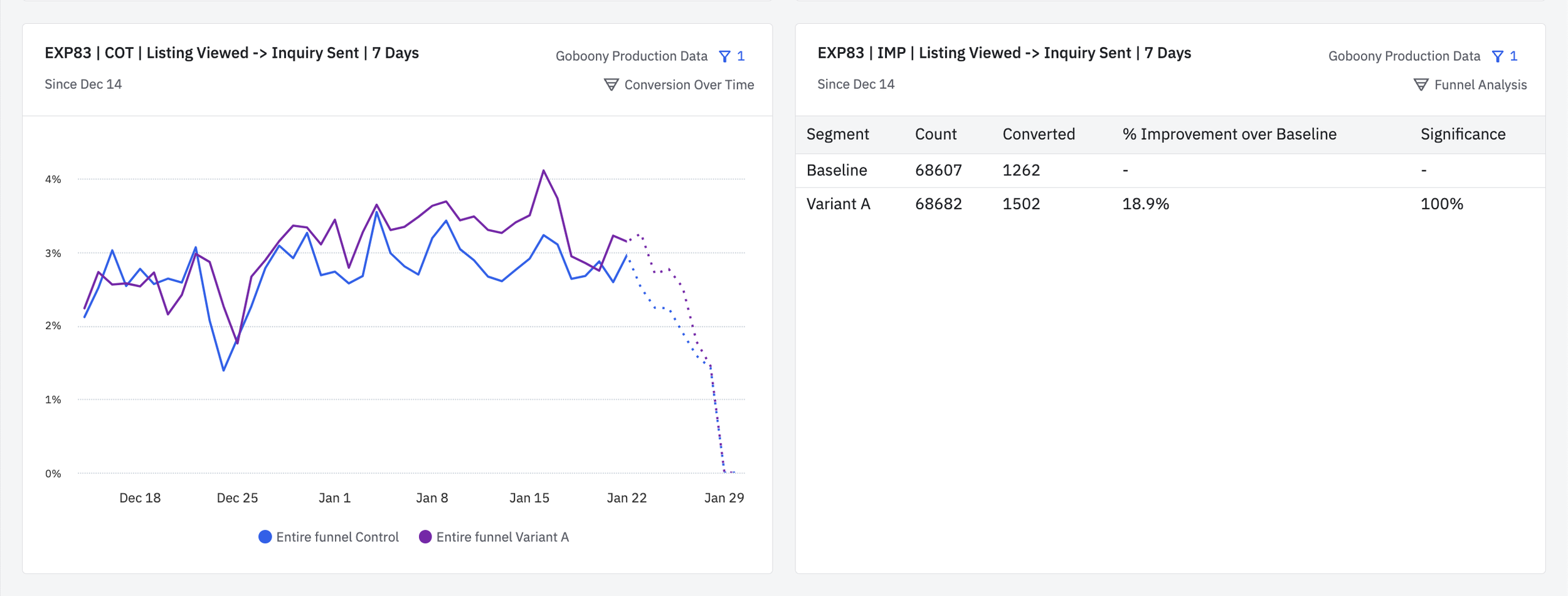
Conversion of viewed to message sent increased by 18,9%
The most noteworthy change we have observed is the increase in the conversion to inquiries sent. Interestingly, we have not witnessed a corresponding increase in the conversion percentage to payment started.
Conclusion
It’s clear that people trust people, not businesses. After analysing the results of our various A/B tests, it became obvious that the solutions focused around increasing ‘humanness’ had the biggest impact on trust, and reducing the time from page view to booking initiated.
Here are some key things we did to illustrate human traits to our journey
Moved the owner block higher on the page with their clear profile picture, and highlighted our feature to message the owner before you book. Encouraging them to interact with the real person who owns this camper van. We recorded a +18.9% increase in messages sent.
We moved reviews from other travellers higher up on the page. Reading from other peoples experiences helps build trust.
For insurance products, we evaluated the information and rewrote the information in more casual everyday language. We also focused on writing it from the lens of ‘Why would I as a traveller want this insurance’. This directly spoke to fears of our users
My learnings:
This project was a great testament to how design, data and development can work in parallel when creating new solutions.
Having data team involved from the beginning helped us keep in mind what and how we want to measure ‘success’ for each solution. This greatly helped us advocate for the solutions to the business, as well as confidently see the impact of design